SPACE Student Accomodation
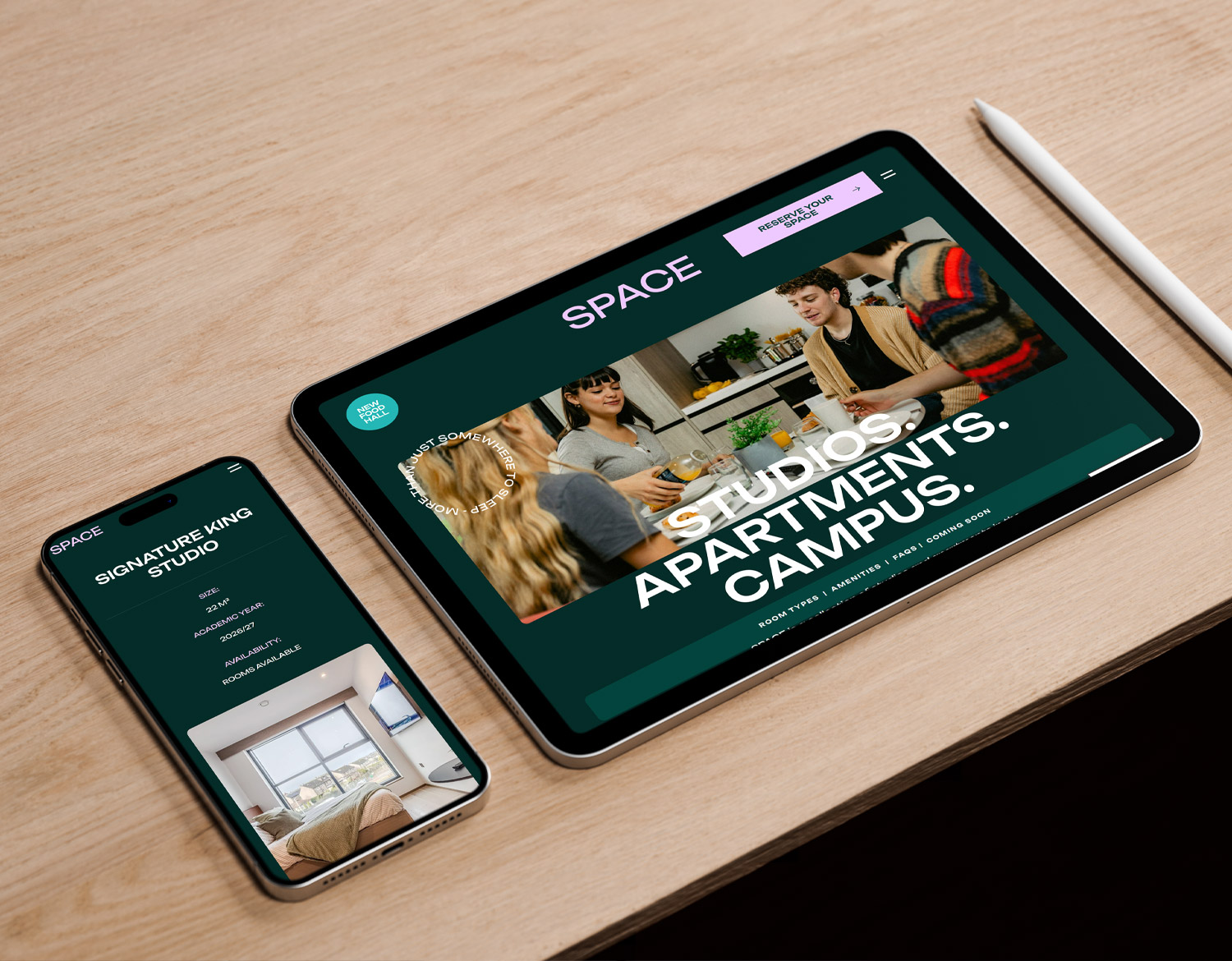
I was tasked to redesign the SPACE student accommodation website, a platform promoting high-quality student living in St Andrews. The project aimed to reposition the website as a true reflection of the brand; modern, premium, and design-led—while significantly improving usability and performance.
The existing site no longer met user expectations. Prospective students, often browsing multiple accommodation options at once, need quick access to clear information, transparent pricing, and an intuitive booking journey. However, the original experience made this difficult, creating friction at key decision-making points.
This redesign wasn’t just a visual refresh, it was a complete rethink of the user experience. The focus was on simplifying how users explore accommodation options, improving speed and accessibility, and creating a seamless journey from discovery through to enquiry or booking.
The end goal was to deliver a website that not only looks contemporary but also works harder as a conversion tool—supporting SPACE in attracting and securing student tenants in a highly competitive market.


Challenge
The original website suffered from several key issues that were negatively impacting user experience and conversions:
- Cluttered layout with too much competing information
- Poor navigation structure, making it difficult for users to find room types and key details
- Slow load speeds, particularly across image-heavy pages
- Lack of clear hierarchy, making important information like pricing, amenities and booking steps harder to access
For a product positioned as “modern student living,” the digital experience didn’t match the quality of the offering.


Solution
Features
- Clear user journeys
Simplified navigation allows users to quickly browse room types, amenities, and FAQs without confusion. - Modern, minimal UI design
A clean visual style reflects the contemporary, design-led nature of the accommodation. - Improved content hierarchy
Key information such as pricing, features, and booking steps is now easy to scan and digest. - Enhanced performance
Faster load times improve usability and reduce drop-off. - Stronger conversion focus
Clear calls-to-action guide users toward booking, aligning with the “no hidden costs” and straightforward process highlighted on the site


Process
- Mapped out improved user flows for key journeys (e.g. browsing rooms, booking)
- Created wireframes focused on clarity and structure
- Designed a modern UI system with consistent spacing, typography, and visual hierarchy
- Iterated based on usability considerations, ensuring the site worked seamlessly across desktop and mobile
Results
- A clean, modern interface that aligns with the SPACE brand
- Improved usability, making it easier for students to explore and choose accommodation
- Faster performance, enhancing overall engagement
- A more conversion-driven experience, supporting booking and enquiry actions


